Wednesday, May 13, 2026

Live Modelling

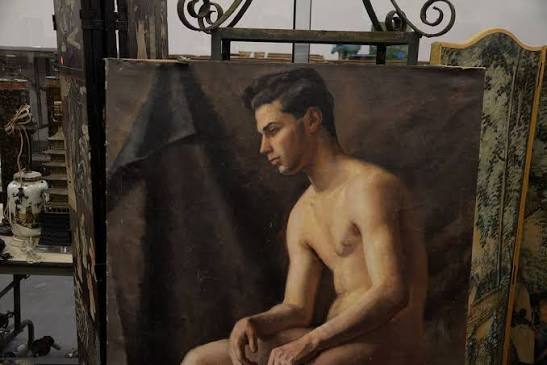
Inside the studio, time settles like dust or heat, under the hard glare of a single lamp. The young man sitting there looks detached from ordinary details of biography. In that light, he becomes sharper and more abstract: ribs, throat, hip, shadow, breath. His body is turned into a landscape of lines and weight. And yet, even in stillness, he cannot fully become an object. The body keeps living. It keeps warming the room, lifting and lowering with breath, refusing to disappear into mere form.


That is the strange contract of live modeling. It sits somewhere between art, commerce, and vulnerability, without ever fully belonging to any one of them. The artist looks with a kind of disciplined intensity, measuring the body against canvas, treating flesh as if it could be translated into line and color. John Berger’s distinction between the naked and the nude matters here: the naked body is simply itself, while the nude body is the body made available to the gaze. In the studio, that transformation is always in motion.


But looking is never as clean as it seems. To observe a body for hours is not a neutral act. Attention begins as technique, then slowly takes on a charge of its own. The artist may try to keep desire out of the room, to turn the body into structure and light, but some of the human heat always remains. It enters the atmosphere. It gives the work its tension. Without that hidden pressure, the painting would risk becoming too neat, too clinical, too dead.


What makes the studio moving is this unstable balance. The model offers nakedness, but not complete surrender. The artist seeks form, but cannot entirely escape feeling. Between them is a silence that is both professional and intimate, both protected and exposed. The final image is a record of anatomy. It is also a trace of the encounter itself — of the fact that one person had to sit still while another tried to make meaning out of flesh, and that neither could fully avoid the force of being seen.

The Triangle

The red light here does more than illuminate the scene. It changes it, thickening everything until the two women seem less like separate figures and more like one shared pulse of crimson and shadow. The touch of lips against a neck feels quiet, almost weightless, and yet the air around it is charged. There is always a third presence in the room, even if invisible: the gaze from the edge of the frame.


That third point is the male imagination. It is not physically inside the scene, but it shapes the way the scene is felt. Laura Mulvey’s idea of the gaze helps explain this tension: looking is rarely innocent. It is often tied to power, to the wish to arrange the world into those who look and those who are looked at. But when the frame holds two women in an intimate exchange, something breaks in that logic. The man is no longer the center of the event. He becomes a witness to his own exclusion.


That is what makes the desire here so uneasy. The fascination is not only erotic in a simple sense. It is also about distance, interruption, and lack. Eve Kosofsky Sedgwick’s ideas about indirect desire help name this: desire often moves sideways rather than straight towards its object. In this scene, the man’s attention is drawn not because he is being invited in, but because he is being kept out. The intimacy is strangely public because it seems to offer access while refusing it.


What he desires, then, is not only the women themselves. He desires the boundary they create. He wants to know whether he is central to the scene or only hovering at its margin, imagining significance where none is granted. The red light intensifies that uncertainty. It blurs the line between attraction and discomfort, between wanting and being unnecessary.

Tuesday, May 12, 2026

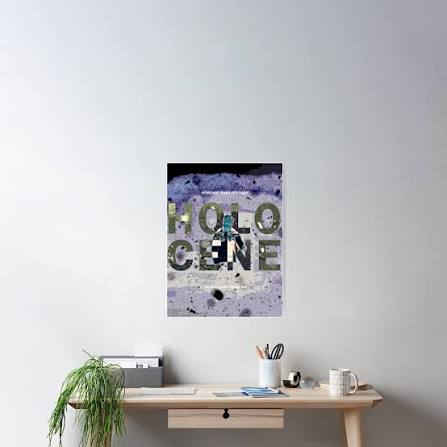
Holocene

The opening of Holocene feels like a cold morning made audible — brittle, bright, and wide open. Then Justin Vernon sings, And at once I knew, I was not magnificent, and what could sound like defeat instead lands like release. In a culture that constantly asks us to build ourselves into something larger, shinier, and more legible, that line feels radical.


So much of modern life runs on self-inflation. We are pushed to perform our lives, curate our identities, and treat every moment as potential evidence of our importance. Even the private self is expected to show up in public, polished into something shareable. The pressure is relentless: be interesting, be visible, be unforgettable. It is exhausting to live inside that demand.


That is what makes the song’s humility so striking. And there is an important distinction worth making here: being insignificant in the sense of being overlooked is not the same as being insignificant in the sense of standing before something far larger than yourself. A crowded room can make you feel erased. A mountain, or a stretch of geological time, makes you feel small in an entirely different way — strangely freeing rather than diminishing. One kind of smallness is humiliating while the other is clarifying.


What Holocene offers is relief from the burden of being the center of everything. It lets the self step back without collapsing. It suggests that not every life needs to be magnificent in order to matter — and that the relief begins precisely when we stop demanding that of ourselves. Once the ego opens its grip, the world becomes larger again: more textured, more mysterious, less trapped inside our own performance.


That is part of why the song endures. It speaks to a quiet exhaustion many people carry now — the fatigue of having to mean so much, all the time. Vernon’s voice names and moves through the fatigue.


In the end, Holocene is not about diminishing the self. It is about giving the world back its scale.

Sunday, May 10, 2026

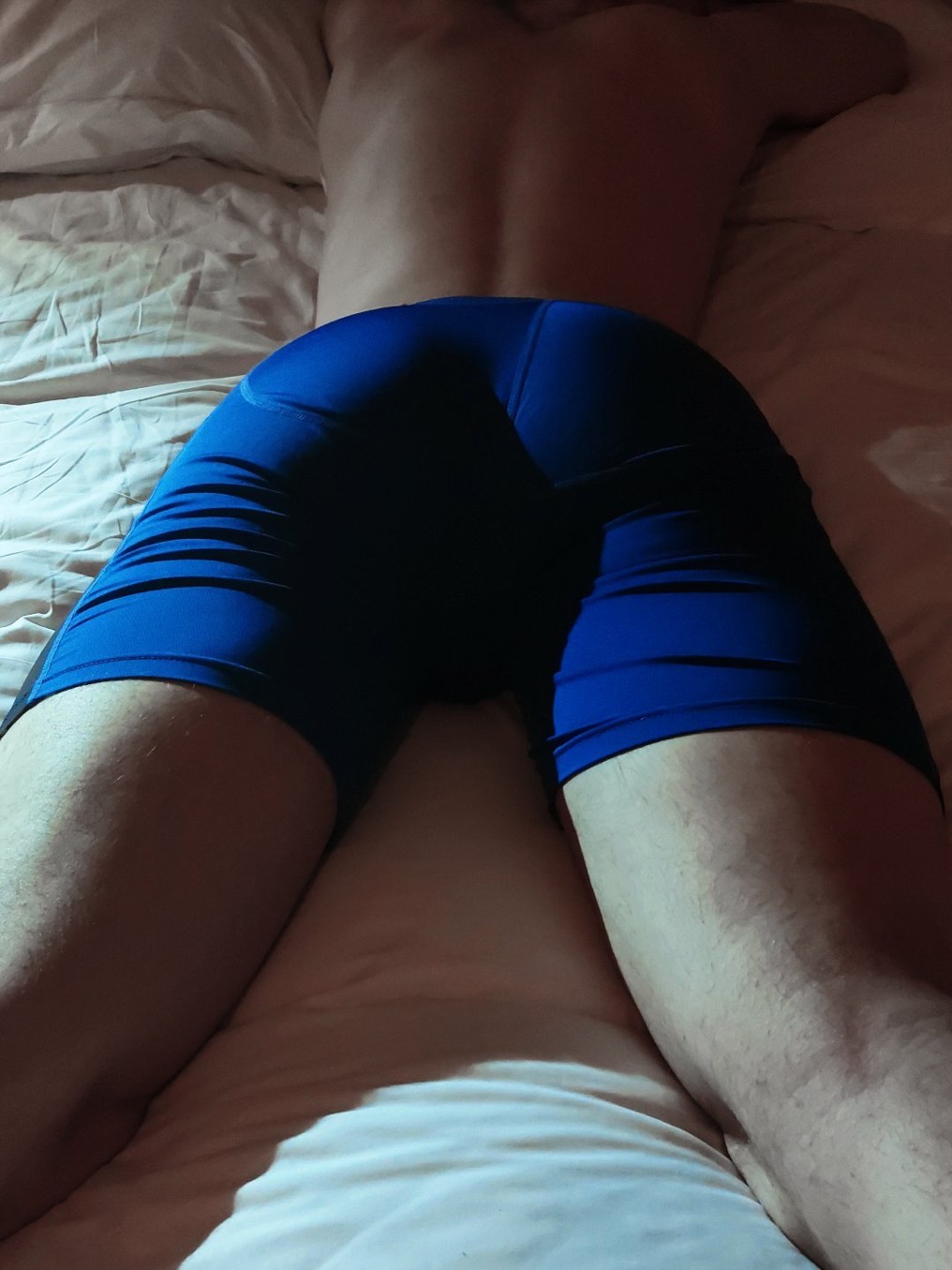
Blue Lycra

The late afternoon light settles across the bed like a warm weight, and the figure lying there feels both relaxed and deliberate. Face down, wrapped in a thin blue Lycra layer, he looks at first like someone resting. But the longer you look, the more it becomes clear that this is not accidental ease. It is a body aware of itself, aware of how it takes up space, aware of the fact that it can be seen.


For a long time, the masculine body was treated mainly as something functional — built for work, endurance, labor, usefulness. It was expected to act, rather than appear. To be looked at was often framed as a loss of authority, a kind of reversal in which the man became an object rather than the subject of the gaze. But that old arrangement has changed. Now the male body is increasingly presented as something aesthetic, something composed, something worth staging. The curve of a back, the shape of a shoulder, the line of a leg — these are signs of strength. They are also signs of display.


That shift changes the meaning of looking itself. Laura Mulvey’s idea of the gaze helps explain how visual power once belonged so clearly to the observer. But here the body is not passively receiving attention. It is participating in it. It is arranged to be watched, and in that arrangement, it gains a different kind of control. Michel Foucault might call this a modern discipline of the body: a way of making identity through posture, visibility, and self-presentation.


What makes this interesting is that it also changes masculinity’s emotional register. Earlier cultures often kept desire towards men hidden, coded, or softened under the language of sport, heroism, or discipline. But in a world shaped by image and performance, that distance shortens. The male body can now be openly curated, openly desired, openly aware of itself as image. And that creates a strange tension: the body still carries the old language of strength, but it now also lives inside the new language of being looked at.


That is the quiet force of the scene. The room stays ordinary, the light keeps fading, but the blue Lycra holds its place like a signal. It marks a masculinity that is no longer only about doing. It is also about appearing, knowingly, in the gaze of others.

Tuesday, May 5, 2026

Street Theatre

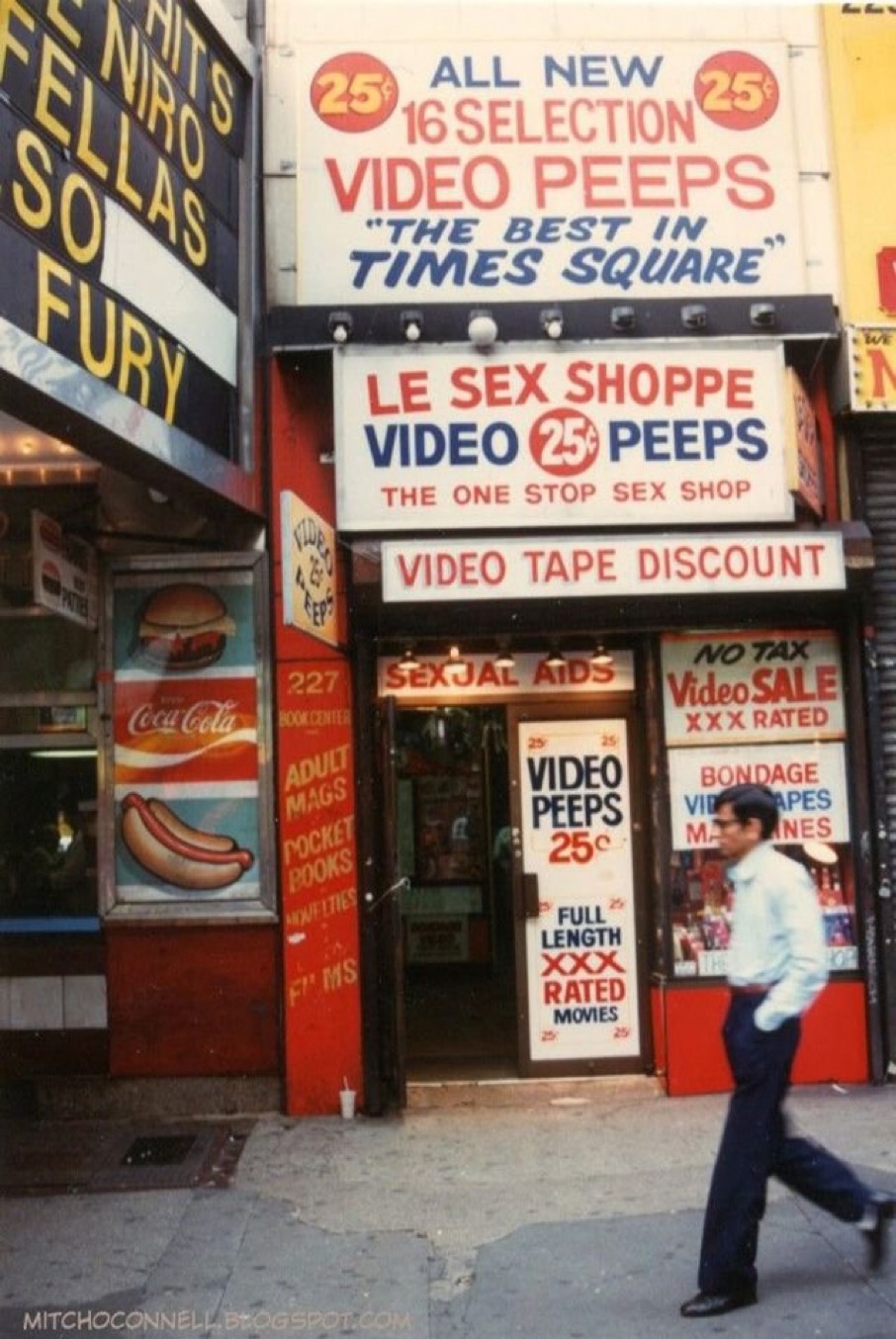
The street ends being theatre. It feels more like corridor now, something people move through without really entering. In the gray light of late afternoon, a man walks past a block that seems to belong to another age — a fading strip of the late twentieth century, still hanging on in patches and signs. On one side, a neon sex shop glows in half-shadow, carrying the old charge of secrecy and transgression. Next to it, a worn Coca-Cola mural clings to the brick, all bright nostalgia and commercial faith. One promises the body; the other, sweetness. One speaks of appetite, the other of desire. Both wait, and both seem strangely abandoned.


The man does not look. He keeps walking, inwardly sealed, as if the street were only background and not an invitation. That, perhaps, is the real quiet death of public life: not that the buildings disappear, but that the gaze withdraws.

Richard Sennett wrote about the fall of public man, about how we once had to learn how to meet one another in shared space. That old social skin has worn thin. The street no longer provokes us, embarrasses us, or even really interrupts us. Desire and consumption have moved elsewhere — not necessarily into the home, but into the private enclosure of the digital mind. When everything can be summoned without touch, the storefront becomes a kind of ghost, still standing but no longer fully alive. The sex shop and the soda ad are just relics now, signs from a time when surfaces still pointed towards lived experience.

Baudrillard helps name the mood: the map has swallowed the territory. The man’s indifference is saturation. Why stop for the bold sign when he carries an entire customized world in his pocket? The street has been smoothed over by private attention. What used to be friction is now just passage.

And something important disappears in that retreat. Yes curiosity, but also the currency of the public good — the sense that a city is made by shared looking, shared hesitation, shared presence. Without that, the street becomes a place to bypass rather than inhabit. The man keeps walking, unremarkable, almost ghostlike, through a graveyard of signs. The deepest change in the city may not be glass towers or new roads, but this quieter thing: the human eye learning not to see what is right in front of it.

Thursday, April 30, 2026

Rained Out

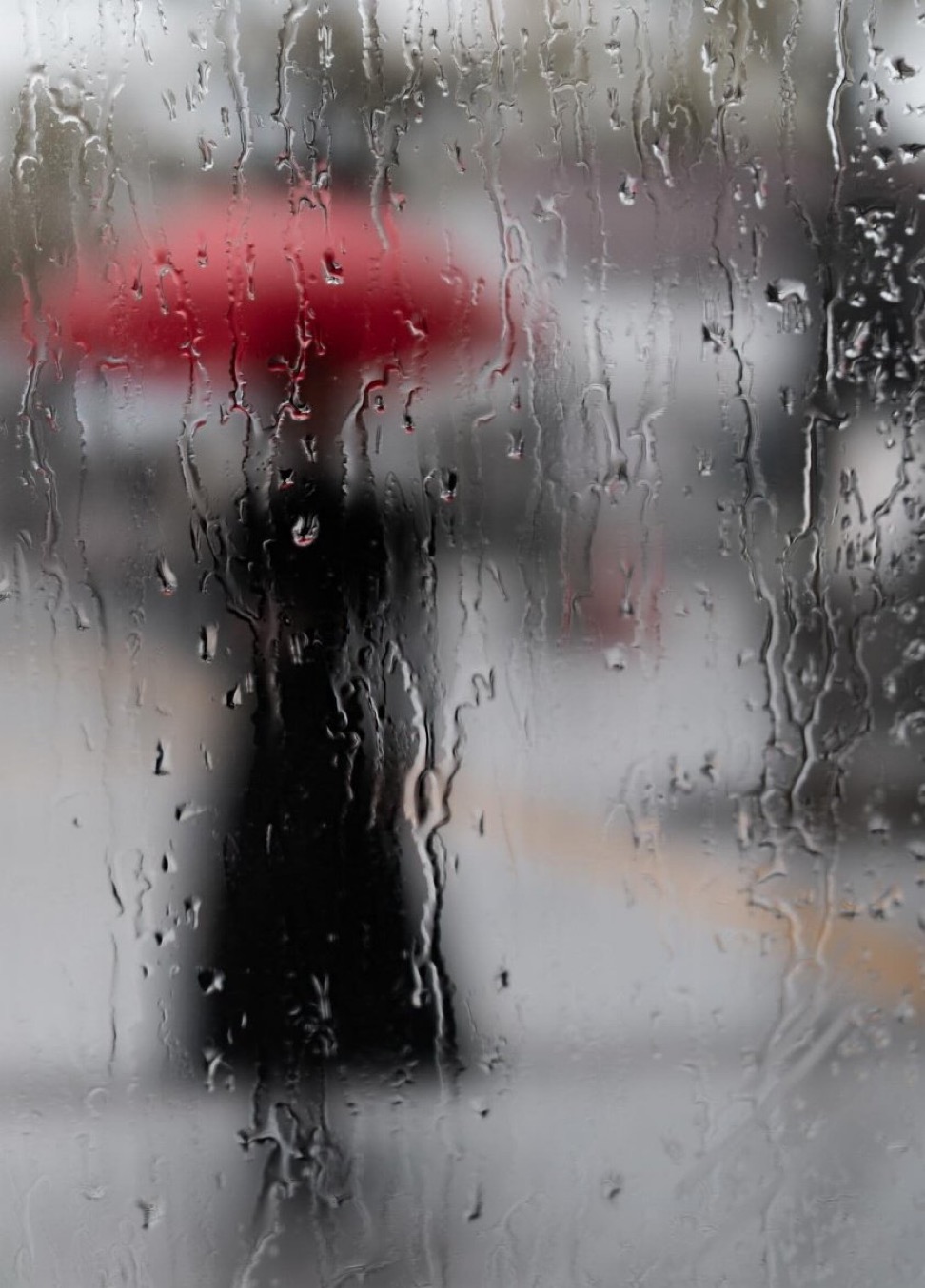
Rain crashes down—it challenges the pavement, gray static blurring the city’s sharp lines into something slippery. From my car, the street’s a blur of hunched shoulders, wiper swishes, heels slapping puddles. Then—bam—a red umbrella pierces the gloom. Stillness in motion.


Under it, a woman stands. Island calm amid the rush. She just is, cradled in that taut crimson dome. Watching from behind glass feels pure—no small talk, just raw seeing. Distance is space, and it’s existential.


Benjamin’s flâneur read cities like books, but this gaze anchors. In Bauman’s “liquid” times, we brush ghosts—connections that slip away. She’s solid, unentered, her red veil a nod to life’s beauty in the unknown.


Intimacy? Maybe the truest kind: unnamed, unclaimed. Knowing her story would drag her into the ordinary grind. Instead, she’s archetype—solitary self in a private bubble. The umbrella? No passion flag—just a shield for the soul.


Our transparent world craves facts, but she gifts opacity. Amid headlights, she claims your full gaze. Cities aren’t crowds; they’re parallel solitudes, lit by rain’s quiet grace.

Friday, April 24, 2026

Circular Memory


The ceiling fan is a slow, rotating prayer. For decades, it has traced the same four-winged diameter in the air of this room, a kinetic halo that persists regardless of who breathes beneath it. To look at it directly is to realize we have stopped seeing it at all. It has achieved the invisibility of a heartbeat or a habit. While the furniture is rearranged—the mahogany desk yielding to a nursery crib, which in turn dissolves into the hollowed-out space of a guest room—the fan remains the room’s only constant. It is a quiet archivist of the mundane, recording time in revolutions.

There is a sediment on the leading edges of the blades: a grey, felt-like fur composed of skin cells, lint, and the microscopic debris of a thousand afternoons. This is the only physical manifestation of its memory. If a clock measures the forward arrow of time, the fan measures its thickness. It turns above the rhythmic rise and fall of chests during afternoon naps; it agitates the air during the heated, staccato bursts of arguments; it hums through the long, stagnant silences of convalescence. It does not discriminate between the monumental and the trivial. To the fan, a birth and a dust mote are handled with the same indifferent displacement of air.

In the sense of Henri Lefebvre, the fan provides the "rhythmanalytical" pulse of the domestic. It structures the unnoticed repetitions that constitute a life. We often imagine memory as a library of snapshots, frozen and archival. But circular memory is different—it is fluid, repetitive, and ultimately exhausting. Like a Samuel Beckett protagonist pacing a fixed square of floor, the fan’s motion and its stasis are effectively the same thing. It moves so that nothing has to change. It represents the paradox of the "long duration": a frantic activity that results in a profound stillness. It is a mechanical Sisyphean, pushing the air around in circles, ensuring that the room never quite settles into the finality of a vacuum.

Does this constant motion erase experience, or does it accumulate it? Perhaps it does both. By returning to the same point every second, the fan suggests that time is not a line we travel, but a medium we inhabit. The air it moves today is, in some molecular sense, the ghost of the air it moved thirty years ago. It witnesses without awareness, a quality that makes its presence both comforting and unsettling. It lacks the cruelty of human forgetting because it never possessed the burden of knowing in the first place. 

As the evening light slants through the blinds, casting the shadow of the rotating blades across the floor like a sweeping second hand, one realizes that the fan is the room’s true occupant. We are the transients, passing through its breeze, aging under its surveillance. 

We provide the noise, the drama, and the heat; the fan provides the equilibrium. It continues its labor of circularity, a witness to the fact that most of living is merely the act of staying in place. When the room is finally emptied, when the voices are gone and the light is cut, the blades will drift to a slow, shuddering halt, holding within their thin layer of dust the entire weighted history of a house that finally learned how to be still.


Thursday, April 23, 2026

The Rearrangement


The stone floor of the terrace is cold, a passive recipient of the day’s residual heat, it does not demand I wear shoes. I cross it with a lightness that feels borrowed. 

Everything is precisely as it was: the terracotta pots hold their dry soil with a stoic indifference; the wrought-iron chairs, spare and rusted at the joints, haven’t moved an inch from the alignment I gave them weeks ago. There is no haunting here, no shifting of furniture in the dark, no sentient whisper in the leaves of the bougainvillea.

And yet, the evening has been recalibrated.

I find myself sitting on the low concrete ledge near the corner. It is objectively less comfortable, a hard intrusion against the spine, but it offers a different angle of the streetlamp’s flicker below. I arrived at the ledge and found the decision already made, as if the space had folded itself in a way that made this specific square foot the only logical destination.

There is a peculiar rhythm to the stillness. I am looking up. Usually, I wait for the first bruise of purple to deep-set into the horizon before I acknowledge the sky, but tonight my chin is turned towards the peak while the blue is still pale, almost translucent. My eyes trace the path of a lone bird, because my attention has been steered away from the book resting facedown on my lap. The terrace seems to dampen the noise of my own intentions.

It is a quiet, architectural gravity. I stay longer than the chill should allow. The air thins, and the familiar dampness of the evening settles into my clothes, but the impulse to go inside—to return to the yellow light of the kitchen and the hum of the refrigerator—is missing. I am waiting for a conclusion that the terrace isn’t interested in providing.

I notice the way my hand rests on the cold stone. In the house, my movements are utilitarian; I reach for handles, I flick switches, I navigate the geometry of my life with a restless, forward-leaning energy. Here, the energy is circular. My hand stays still. My breathing slows to match the immense, unhurried pace of the cooling air.

The rearrangement is in the intervals between objects. It is the gap between a thought and an action growing slightly wider. It is the way the shadows of the railing seem to suggest a path I hadn't considered, leading my gaze towards the dark mass of the trees at the edge of the property. I am being edited. My habits are being pruned, by the simple, stubborn presence of the open air and the way it refuses to be rushed.

Eventually, I will stand and go inside. I will leave the chairs and the plants exactly where they are, frozen in their domestic positions. But as I walk towards the door, I feel the slight, phantom weight of a different person—someone whose evening was not spent, but rather, allowed to happen. Perhaps the terrace is a mold into which I am poured each twilight. It shapes the way I pass through the hours, turning a straight line of a day into something curved, something quiet, something that knows how to linger without asking why.


Wednesday, April 22, 2026

Broken Images


The silvered glass on the hallway wall has begun to exhibit a curious, rhythmic fatigue. For a long time, I suspected the light—the way the Dehradun sun filtered through the rain-streaked windows—but the truth is more intimate and more unsettling. The mirror has developed its own sense of duration. It has stopped being a prompt delivery system for the present and has become, instead, a curator of the immediate past.

When I raise a hand to adjust my collar, the reflection remains still for a heartbeat too long. Then, it follows. The movement in the glass is a gesture that feels considered, as if the image were weighing the necessity of its own occurrence. A smile begins on my lips, but the face in the glass remains grave for a second longer, only yielding to the expression when my own muscles have already begun to relax.

This slight, deniable delay shifts the mirror from an object of vanity to a site of negotiation. We are raised on the myth of the mirror’s immediacy—the instant feedback loop that assures us of our coherence. But when the reflection arrives late, the "I" is suddenly bifurcated. There is the "I" who acts in the flow of lived time, and the "I" who is observed, captured in a private, elastic temporality.

Henri Bergson might have seen in this glass the triumph of durée over the ticking of the clock. The mirror is stretching time, allowing a gesture to linger, to breathe, to possess a density that the fleeting present usually denies. In this lag, the self becomes a succession of overlapping states rather than a single, static point.

Yet, there is a tremor of Lacanian anxiety in this haunting of the glass. If the mirror stage is where we first assemble a "self" from a fragmented reality, what happens when that assembly loses its synchronicity? When the expression in the mirror hardens without my consent, or softens when I am still brittle, the recognition begins to feel like interpretation. I am looking at a version of myself that has gained a terrifying autonomy. I am forced to ask: which of us is the original? Is identity the thing that happens in the skin, or is it the image that lingers, refusing to vanish at the appointed hour?

This disturbance is small, almost polite. It demands a different kind of patience. I find myself standing before it, waiting for my reflection to catch up, watching my own eyes blink back at me from a moment that has already passed. It is a quiet reminder that the self is never a finished product, but a series of broken images, stitched together by the desperate hope that we are, in fact, who we see.

In this subtle lag, the mirror suggests that perhaps the most honest encounter with oneself is found in the delay—in the space where we are allowed to watch ourselves becoming, rather than merely being. Recognition, I realize, was always just a form of memory. And in the hallway, in the cooling light of the valley, I continue to wait for myself to arrive.


Icebergs

The sun performs its usual mechanics, dragging shadows across the floorboards in a slow, silent sweep, yet I find myself standing in the wake of moments I cannot quite claim. There is a specific, quiet moment occurring in the margins of the afternoon. It is a soft betrayal. I am living a life of smooth continuity, yet the archive does not quite balance.

I arrive at the terrace, the air tasting of impending rain and the bitter soot of the city, and the iron railing feels familiar under my palm—with the phantom warmth of a hand that was there only seconds ago. My own hand. I look out over the skyline, and the transition from the stairwell to this open expanse is missing. The climb has been edited out. There is no exertion in my lungs, no echo of my footsteps on the concrete. I have merely arrived, a ghost haunting my own physical coordinates.

The day proceeds with an eerie, polished efficiency. I find a cup of tea on the table, the porcelain still radiating a gentle heat, the liquid lowered by exactly half. I have no recollection of the steam rising against my face or the initial astringency of the brew on my tongue. I possess the result of the action without the experience of it. It is as if I am reading a novel where certain paragraphs have been rendered in invisible ink—the plot advances, the characters evolve, but the texture of the prose remains just out of reach.

Even the architecture of silence has changed. I will be sitting in the armchair, the light thinning into a bruised purple, and I will feel the after-feeling of a conversation. It is a residue in the throat, a lingering resonance in the chest—the weight of a word shared or a secret confessed—but the room is empty. I am alone, yet the air is thick with the vibration of a presence that has just departed. I feel bypassed.

There is a profound dignity in this absence. I have stopped trying to reach back into the fog to retrieve these lost slivers of duration. To do so feels like an intrusion. If time has decided to uncouple itself from my awareness, perhaps it is because those moments require a version of me that is less burdened by the act of witnessing. We operate under the vanity that we are the sole occupants of our skin, that every heartbeat must be logged and every thought notarized by the conscious mind. But what if the psyche requires its own "elsewhere"?

I suspect that the missing portion of my day is functioning in a parallel quietude, a sanctuary where the self continues to breathe and move without the heavy shadow of observation. It is a life lived in the blind spot of the soul. Everything continues smoothly—the clock ticks, the mail arrives, the body persists—but a fraction of the essence has migrated.

Perhaps we are only ever partially here. We are like icebergs of consciousness, with the vast majority of our existence submerged in a deep, dark elsewhere, performing the essential work of being while the small, visible tip imagines it is the whole. I respect the gap. I let the tea grow cold. I stand on the terrace and look out at the world, knowing that somewhere, in a fold of time I cannot see, I am already doing exactly the same thing.


Tuesday, April 21, 2026

Plastic Chair?


The white monobloc chair—that ubiquitous, injection-molded ghost of the Anthropocene—is rarely granted the dignity of a history. We treat it as a punctuation mark in a temporary space, a cheap convenience to be stacked and forgotten. But left on a terrace through the turning of a Himalayan year, it ceases to be furniture and begins to resemble a gargoyle. It becomes a static witness to the slow, agonizing choreography of the seasons.

Through the white-heat of May, the chair endures. The sun is a sensory weight, a pressurized gold that seeks to soften the polymers of its spine. In this kiln of light, the plastic begins to "chalk"—a microscopic shedding of its synthetic skin, turning a dull, matte grey. It is here that the chair begins its migration away from the domestic and towards the elemental. Is it still an emissary of the dining room, or has it been colonized by the sky? It holds the heat long after the sun has dipped behind the jagged silhouette of the Mussoorie hills, radiating a synthetic fever into the cooling twilight.

Then come the rains. The monsoon is an immersion for the chair. It sits in the center of the downpour, its cupped seat becoming a temporary vessel for the sky’s overflow. Here, it absorbs the "dampness" as a mood. It witnesses the frantic arrival of the house-dwellers to retrieve drying laundry, and their subsequent retreat behind glass doors. In those long, gray hours of human absence, the chair enters a Latourian network of agency. As Bruno Latour might suggest, the chair is an active participant in the terrace’s ecology. It collects the moss in its crevices; it provides a landing strip for the sodden crow; it anchors the wind. It has shifted from an "object" to a "thing"—a gathering point for forces that have nothing to do with human comfort.

As winter settles, bringing with it a fine, funerary shroud of dust, the chair records the fatigue of the household. It remembers the weight of the solitary smoker at midnight, the hushed intensity of a conversation between lovers that dissolved into the mist, and the heavy, slumped silence of a man watching the valley lights flicker like dying neurons. The chair archives the shadows in its cracks.

At what point does an object begin to outlive the intentions of those who use it? Perhaps it is when the plastic becomes so brittle that it threatens to shatter under the weight it was designed to support. In that fragility, it gains a soul. It has seen the seasons strip the house of its pretension, watching as the paint peels and the garden withers, while it remains—stubborn, petrochemical, and strangely loyal.

Ultimately, the plastic chair on the terrace belongs to the weather. It has been baptized by the dust and tempered by the frost until its original purpose—to be sat upon—feels like an insult to its lived experience. It has become a monument to the quiet settling of evenings, a white ribcage holding the breath of the house. It becomes a product of the air, standing as a sentinel at the edge of the human world, waiting for a guest who may never arrive.


Sunday, April 12, 2026

Cat


The transition arrived as a series of soft, corrective silences. I noticed it first on the terrace, where the light at dusk has a way of flattening the world into copper silhouettes. I was standing by the railing, perhaps staring too long at the fraying edges of a cloud, when I felt the weight of a gaze—not predatory, but clinical.

He was sitting by the terracotta pot of withered basil, his paws tucked with a terrifyingly precise symmetry. He was looking at me. It was the look a seasoned foreman gives a trainee who has forgotten to put on their hard hat. There was a faint, twitching disappointment in the tip of his tail, a rhythmic tallying of my inefficiencies.

It began with the pacing. My movements, which I previously considered intentional, were revealed to be erratic through the lens of his new stewardship. If I rose to make tea, he was already at the threshold of the kitchen, not begging, but presiding. He would watch the kettle whistle with a turn of his head that suggested he found my reliance on boiling water to be a precarious survival strategy. When I sat to write, he would position himself exactly three feet away—an anchor for a vessel he suspected was drifting.

There is a specific quality to being monitored by a creature that cleans itself with such utilitarian rigor. He has begun to audit my meals. He does not try to steal the food but observes the intake. When I eat a sandwich standing up, his ears rotate backward in a gesture of profound concern. You are not fueling the engine correctly, his posture suggests. You are failing the basic requirements of the organism.

I found him yesterday in the hallway, staring at a patch of peeling wallpaper I had ignored for months. He merely sat before the flaw, then looked at me, then back at the wall. He was flagging a maintenance issue. He stayed there until I touched the paper, acknowledging the decay, at which point he blinked slowly—the feline equivalent of a signed-off work order—and moved to the next station of my incompetence.

The terrace has become the primary theater of this quiet guardianship. I go there to lose myself in the cadence of the evening, but I am no longer allowed the luxury of total disappearance. If my stillness lasts too long, if the "deep shadows" I tend to cultivate in my prose begin to manifest in my physical slumped shoulders, he intervenes. A sharp, brief rub against my shin. A reminder to breathe, to circulate, to remain viable.

I am being managed. It is an understated bureaucracy of fur and stillness. He has assumed the burden of my survival without a single vocalization, stepping into the vacuum left by my own drifting attention. He watches me sleep with the vigilance of a night watchman guarding a particularly fragile museum exhibit.

It is a humbling thing to realize you have been deemed a high-maintenance ward by a ten-pound predator. I move through my routines now with a strange, new self-consciousness, aware that my every lapse is being recorded in an archive of feline pity. I am being looked after—patiently, without permission, and with the grim dedication of a creature who knows that if he doesn't keep me tethered to the ordinary, I might simply evaporate into the thought-smoke of my own making.


Sunday, April 5, 2026

Falling Into Ourselves


The physics of the soul is dictated by a singular, invisible point: the center of gravity. In the physical realm, it is the balance point where weight is evenly distributed, the anchor that prevents a structure from toppling when the wind howls. In the metaphysical realm, however, our center of gravity is a choice rather than a fixed coordinate—a directional instinct triggered the moment the world decides to strike.

Life, in its indifferent brilliance, is a relentless pitcher of curveballs. It renders us blows that fracture our carefully curated narratives, leaving us breathless and unmoored. In that split second of impact, before the conscious mind can craft a defense, a reflex takes hold. We fall. The question that defines the trajectory of a life is not if we fall, but where. Do we fall into ourselves, or do we fall into the world?

To fall into oneself is an act of radical, quiet bravery. It is the decision to absorb the blow rather than deflect it into the ether. When we collapse inward, we are choosing the heavy, humid atmosphere of our own interiority. We sit in the dark with the pain, tracing its jagged edges with the fingers of our consciousness. This is the labor of the "archive"—the slow, agonizing process of feeling what must be felt and processing what must be integrated. It is a metabolic healing, a nourishment that occurs in the blood. It the damp, silent work of roots in the earth, inching through the soil day after day, refusing to look away from the source of the ache until the ache itself becomes part of our architecture.

Conversely, there is the siren call of the world. To fall into the world is to seek a horizontal escape from a vertical reality. It is the reflex of the fugitive. When the pain becomes a sun we cannot look at, we turn toward the neon flicker of external solace. We chase the dopamine of the temporary; we hunt for pleasure, for noise, for the frantic company of others, for anything that promises to act as a local anesthetic.

Falling into the world is an attempt to tear ourselves away from the source of the pain, forgetting that the source is carried within us. We become ghosts haunting our own lives, seeking a "forgetting" that is actually a fragmentation. We scatter our focus across the landscape of distractions, hoping that if we move fast enough, the blow will never land. But energy is only displaced. The blow we refuse to absorb into our center of gravity merely vibrates through our periphery, shaking the foundations of everything we build until the structure inevitably fails.

The world offers a million ways to go numb, but the soul only has one way to go whole.

Finding one’s center of gravity requires an understanding that the only way out is through the center. If we fall into the world, we are at the mercy of the world's tides—perpetually drifting, forever reacting, always a little bit further from the shore of our own truth. If we fall into ourselves, we discover that the center is a foundation rather than the void.

It is in the quiet nourishment of the interior—the slow, rhythmic breathing into the wound—that we find the weight necessary to stand again. We heal the pain by becoming large enough to house it. We refine the model of our existence until the blow becomes a catalyst. We learn that to fall inward is to anchor. We become our own gravity, heavy with the wisdom of the struggle, immovable even as the world continues its chaotic, spinning dance.


Tuesday, March 31, 2026

Life is a Verb


The monsoon arrives as a terrestrial reset, a violent grace that refuses the permanence of any human claim. In the lowlands, the wasteland is not a static geography but a recurring event. Each year, the sky bruises to a deep, heavy indigo, and the rains descend to dismantle the shanties, dissolving the mud-packed floors and stripping the corrugated sheets until the earth reclaimed by the water is indistinguishable from the chaos of the flood.

And yet, as the silt settles and the humidity begins its long, slow simmer, the inhabitants return. There is no mourning the lost structure with the static grief of those who own stone. 

Once the land is dry, they begin the labor of becoming again. They haul, they tether, they patch. To look at these settlements and see "poverty" is to see a noun—cold, fixed, and pitiable. To look at them and see the rebuilding is to recognize the verb. The shanty is not a thing but a persistent act of defiance against the inevitable.

This is the great, shimmering truth we spend our lives attempting to ignore: nothing is ever finished. We treat our identities, our griefs, and our triumphs as monuments—granite slabs we can polish and protect. But the universe has no interest in monuments. It deals only in currents. To cling to a "self" as a finished product is to attempt to dam a river with a handful of sand. It is the wise who understand that the eye must be wiped clean every morning, that to truly see is to witness the world again and again for the first time. The moment we name a thing, we stop seeing it and start seeing our definition of it.

To see the flow is to understand that stability is a hallucination of the slow-moving. If we zoom out far enough, even the mountains are a slow, subsurface wave. If we zoom in, our very cells are a frenetic exchange of energy, a constant dying and birthing that maintains the illusion of a solid "me." When we stop resisting this motion—when we stop trying to freeze the frame—we move from being the observer of the storm to being the wind itself. There is an exquisite, ungraspable beauty in this lack of tether. It is the freedom of the unfinished.

Even the finality of the grave is a linguistic lie. Death is not the end of the sentence but a shift in syntax. Life continues its conjugation in the memory that stings the eyes of a survivor, in the sharp, sudden cadence of words left behind in a dusty notebook, or in the haunting stillness of a photograph where a gaze still reaches out to touch the living. We are exhaled into the air, an essence that lingers in the lungs of those who follow, a quiet ripple in the collective ambient pressure.

We are not the house but the building of it. We are not the wound but the healing of it. In this wasteland of shifting tides and seasonal wreckage, there is no arrival, only the exquisite, terrifying, and holy momentum of the journey. Life is not a state of being we inhabit rather an action we perform until the very last breath—and then, it is an action that the world performs in our absence.


Wednesday, March 25, 2026

Four by Four


The shadow of the four-letter word is a long one, cast by the flickering candles of a thousand Victorian parlors and the stern, pursed lips of a century’s worth of schoolmasters. It is a phrase that arrives with a built-in recoil, a linguistic flinch. To speak of "four-letter words" is to invoke the blunt, the base, and the broken—the vocabulary of the gutter, the sharp exhale of the frustrated, the jagged glass of the tavern brawl. We have been conditioned to see these four-character clusters as the weeds in the garden of discourse, things to be uprooted, bleached, and replaced with the ornamental topiary of Latinate synonyms.

Yet, if we hold the phrase "four-letter words" to the light and turn it gently, the prism shifts. The shadow does not disappear, but it begins to describe a different shape. What if these words are not the pollutants of language, but its bedrock? What if they are not merely the markers of impropriety, but the smallest, most pressurized vessels of the human condition?

Consider the symmetry of the architecture. The tongue does not discriminate between the sacred and the profane when the count is four. Love sits on the same shelf as the crudest anatomical slur; fear occupies the same rhythmic space as the most visceral curse. We have spent an eternity separating the acceptable from the forbidden, categorizing our outbursts into neat piles of "grace" and "filth," yet the body experiences both with an identical, shivering intensity. The pulse does not check a dictionary before it quickens.

There is a strange, muscular economy to the four-letter word. It is a linguistic bullet, stripped of the aerodynamic fluff of suffixes and the self-importance of multi-syllabic pretense. To speak in fours is to speak in a state of emergency or a state of ecstasy.

Pain is a four-letter word. It is a blunt strike, a singular thud against the consciousness.

Glee is its high-frequency twin, a spark that vanishes as quickly as it ignites.

Pure and Rave, Tang and Loss.

These are not words that describe life from a safe, academic distance. They do not meander through the scenic routes of "unfortunate circumstances" or "momentary exhilaration." They strike at the center. They are the vocabulary of the bone and the gut. When we are reduced to our most honest selves—when the ego is stripped bare by a sudden blow or an unexpected kiss—we do not reach for the ornate. We reach for the four.

The tragedy of our linguistic policing is that by stigmatizing the "four-letter word," we have inadvertently cast a shroud over the tools required for an unfiltered life. We have been taught to fear the sharp edges of the tongue, forgetting that the same edge used to wound is the one required to carve out the truth. A curse is often just a prayer that has lost its patience; a confession is often just a wound finding its voice. Both arrive in that same, compact shape.

In the quiet observation of our own internal weather, we find that the "taboo" and the "tender" are made of the same vibrating material. There is a hidden symmetry in how we navigate our days through these monosyllabic anchors. We wake in dark, we seek the dawn. We feel the urge, we endure the halt.

Society insists on a hierarchy of utility, telling us that "nice" words are for the parlor and "bad" words are for the alley. But the mind is a lawless place. In the heat of a rave or the cold hollow of a void, the distinction between a profanity and a poem dissolves. 

They are both attempts to bridge the gap between the unspeakable interior and the audible world. They are fragments of a more honest, prehistoric vocabulary that existed before we learned to use language as a mask.

To embrace the four-letter word is to stop treating language like a costume and start treating it like a skin. It is to recognize that our "crude" outbursts are often our most authentic echoes.

By widening the definition, we reclaim the four-letter word as a tool of recognition rather than classification. We stop looking for the smudge on the page and start looking at the weight of the ink. If we allow ourselves to see hope as clearly as we see its cruder cousins, we realize that the brevity of the word is not a sign of its simplicity, but of its density. It is the diamond formed under the immense pressure of being human.

Ultimately, "Four by Four" is an invitation to inhabit the small spaces of our speech. It is a call to stop apologizing for the jaggedness of our expressions and to find the grace in the blunt. We are composed of these fragments—tiny, four-sided mirrors that reflect a different version of the truth depending on how the light hits them.

The world is loud, complex, and increasingly draped in the soft, suffocating fabric of euphemism. In such a landscape, the four-letter word—in all its forms—acts as a necessary puncture. It lets the air in. Whether it is the ache of a long-held secret or the fire of a new conviction, these words remind us that we are still here, still feeling, and still capable of speaking the truth in its most elemental form.

We do not need more syllables to be more human. We only need the courage to use the ones we have, unfiltered and unafraid.


Saturday, March 21, 2026

An Intellectual Life

The Dehradun valley, a basin cradled between the ancient folds of the Himalayas and the aging Shivaliks, is a psychological landscape. To lead an intellectually rich life here is to engage in a constant, rhythmic dialogue between the sprawling external majesty of the Sal forests and the tight, intimate architecture of the interior self. It is a life lived at the intersection of height and depth.

In the valley, intellect is not a sterile, academic exercise. It is weathered by the humidity of the monsoon and sharpened by the crisp, biting air of a Mussoorie winter. An intellectually rich life in this terrain requires one to be a "literary naturalist." It means understanding that a book by Gerald Durrell or a poem by Mary Oliver takes on a different molecular weight when read under the shadow of the mountains. Here, the mind must mirror the ecosystem—diverse, resilient, and deeply rooted.

The richness comes from resisting the urge to let the vastness of the landscape diminish the self. When surrounded by peaks that have stood for millennia, there is a temptation toward a hollow insignificance. However, the true intellectual task is to inhabit one’s own body with a fierce, quiet presence. It is the practice of somatic grounding: feeling the soles of your feet on the rocky riverbeds of the Song or the Tons, ensuring that while your thoughts may scale the summits, your nervous system remains anchored in the immediate, physical "now."

To focus on relationship within this solitude is the valley’s greatest challenge and reward. In the city, relationships are often transactional or frantic. In the valley, they are slow-growing, like the moss on the north side of a deodar tree.

An intellectually rich relationship here is built on the capacity for shared observation—watching the winter line appear on the horizon without the need to colonize the moment with speech.

It involves treating the "other" not as a distraction from the intellectual quest, but as its primary subject. To love another in the shadow of the mountains is to acknowledge our shared fragility against the backdrop of the eternal.

Ultimately, staying rooted in one’s own mind requires a "fingerprint" of thought—a style of being that is uniquely yours. The valley offers the silence necessary to hear your own cadence.

"The forest does not demand your attention; it invites your presence. To be intellectually rich is to accept that invitation without losing the thread of your own story."

It is a life of deliberate containment. You allow the mountains to inform your scale, the forests to inform your complexity, and the rivers to inform your flow, but the hearth—the center of the mind—remains your own. It is the realization that the most profound peaks are not those seen through the window, but the ones climbed within the silence of a morning meditation or the margins of a well-worn notebook. In Dehradun, the mind finds its true altitude by learning how to stay home.


Tuesday, March 17, 2026

The Stories We Tell About Birds


We inherit language as we inherit weather: a climate we did not choose, yet one that dictates the very nub of our perception.

There is a profound, desperate vanity in the human impulse to name. Among all living things, birds seem to endure the most exquisite of our poetic projections. Perhaps it is because they exist in the liminal — creatures that navigate the seam between the heavy earth and the infinite sky. Or perhaps we envy their vantage point, their ability to look down upon our small, cluttered lives. More likely, we need them to carry the weight of the stories our own voices are too fragile to hold.

Consider the collective nouns we have fashioned for them — tiny, linguistic guillotines.

A murder of crows.

A conspiracy of ravens.

These phrases arrive with a gothic flourish, stained by centuries of superstition. We have chained the crow to the antechamber of death, casting it as a scavenger of souls. The raven is granted an even more sinister architecture: a plotting, unkind guardian of omens we lack the courage to speak aloud. The English language crystallizes these judgments into a single word, as if a syllable could ever encapsulate the totality of a life.

But the truth is a quieter, more tender thing.

Crows groom one another with a delicate, heartbreaking affection. They bring trinkets — shards of glass, silver foil, small buttons — to humans who show them grace. They recognize faces; they grieve their dead; they love for decades. To label a creature capable of such sophisticated loyalty as “murder” is not a description — it is a confession of human fear.

And the ravens? Far from being conspiratorial, they are the jesters of the high peaks, inventing games in the snow and mimicking human laughter with a tenderness that borders on the uncanny.

Language distorts the lens until we can no longer see the bird for the name.

For me, however, the most confounding inhabitant of this linguistic cage is the Owl.

In the West, a group of owls is a parliament. The word suggests a dignified silence, a gathering of ancient minds in deep, nocturnal consultation. Sacred to Athena, the owl is a symbol of clarity, a spiritual lighthouse in the dark. It is the elected custodian of the unseen.

Yet, this is not the owl that haunts the Indian psyche.

In Hindi, one of the most pervasive insults is “Ullu ka Pattha” — the son of an owl. A fool. A simpleton. It is an insult that functions as a cultural inheritance, whispered into the ears of children before they even know the weight of a wing. Here, the owl is shorthand for misfortune, for the socially inconvenient, for a strangeness that refuses to be tamed.

Perhaps we fear their swiveling, impossible heads, or the way their unblinking yellow eyes seem to strip us of our pretenses. Or maybe it is their call — that low, hollow percussion that sounds like a forgotten memory calling your name from an empty room. In our folklore, the owl occupies the uneasy hollow between guardianship and madness. It belongs nowhere completely, which means it haunts everywhere partially.

I return to them because birds mirror the human psyche in ways we are too proud to acknowledge.

We turn them into symbols because symbols are easier to carry than the messy, breathing complexity of a living thing. A crow is too much: it is social, mischievous, mournful, and wise. So we flatten it. We choose a single, jagged angle and call it the Truth. This is what we do to birds, to our neighbors, and ultimately, to ourselves.

These collective nouns tell me nothing of the birds, but everything of the people who named them.

A murder of crows tells me that humans fear the end so viscerally they project it onto black feathers.

A conspiracy of ravens tells me we distrust any intelligence that stares back at us with equal curiosity.

A parliament of owls tells me we believe wisdom is found in the dark.

But the Ullu tells me that silence can be terrifying when it reveals nothing we recognize. It tells me that wisdom, without cultural permission, is dismissed as idiocy.

We find it easier to call the unknown “foolish” than to approach it with humility.

The birds do not carry these burdens; we do.

Sometimes I wonder what collective noun we would choose for our own species, if we were stripped of our vanities. A confusion of men. A solitude of old women. A grief of families. A forgetting of nations.

Perhaps the truest would be this: a story of humans. For we live entirely within the narratives we weave, caught in the web of our own telling.

The owl remains my most faithful ghost because it defies every category. It is wise and foolish in the same breath, sacred and unsettling, an omen of loss and a beacon of guidance. It is the bird of the liminal world — the one we enter when we close our eyes and listen to the night-tide rising inside us.

It occupies the same terrain as memory: elusive, dark, strangely comforting, and vaguely threatening. It is a creature shaped by our misunderstanding, yet utterly undisturbed by it.

A parliament. An ullu. Wisdom. Folly.

It holds these contradictions without shattering. If only we possessed the same structural integrity.

In the end, our names for the world are merely fences we build to keep the infinity out. But the birds, like grief, like the sky, refuse to be fenced. The real wisdom of the owl is not that it knows more than we do, but that it moves through the darkness without the need to define it.

 It is free because it has no story for itself. It simply is.


On Silence


Silence is the gravity of my work. It is a primal instinct — the foundational element upon which every sentence is built. I have always found that the most profound human transactions occur in the wordless spaces between heartbeats. Consequently, the narrative rarely spills into the cacophony of the external world; instead, it unfolds within the hallowed, private theater of the narrator’s mind.

This creates a closed, almost claustrophobic intimacy — a room where the consciousness of the narrator and the reader meet. In this space, there is only the quiet, rhythmic collision of thought, memory, and sensation moving against the glass of the ego.

The characters who inhabit my books, drift. They pass through the narrator’s awareness like shadows moving across a sunlit floor — gradual, often wordless, and always carrying a heavier emotional truth in their mere presence than in any dialogue they might utter. They are the ghosts of our lived experience, felt long before they are heard.

This methodology is a deliberate act of sanctuary. The themes I am compelled to explore — the jagged edges of loneliness, the ancestral pull of the animal self, the quiet, persistent ache of the human condition — possess the power to dismantle a reader’s worldview. If I were to approach these truths with the blunt force of argument or the frantic pace of plot, the reader might recoil.

Instead, I offer the silence as a safeguard. I want the reader to feel held, to feel a profound respect for the sanctity of their own internal life. My intention is never to confront the world with a clenched fist, but to carry a small, steady flame into the dark corners of the rooms we all inhabit — the rooms we are often too frightened to examine with honesty.

For me, silence is the highest form of truth. It is the clearing in the forest where feeling is permitted to surface without the distortion of force. It allows the reader to breathe in tandem with the narrative, to inhabit the cadence of the prose until the distinction between the writer and the witness dissolves.

In that profound quiet, something essential is revealed. It is a truth revealed through presence — the simple, terrifying, and beautiful realization that to be silent is to finally, truly, be heard.


Live Modelling

Inside the studio, time settles like dust or heat, under the hard glare of a single lamp. The young man sitting there looks detached from or...