The street ends being theatre. It feels more like corridor now, something people move through without really entering. In the gray light of late afternoon, a man walks past a block that seems to belong to another age — a fading strip of the late twentieth century, still hanging on in patches and signs. On one side, a neon sex shop glows in half-shadow, carrying the old charge of secrecy and transgression. Next to it, a worn Coca-Cola mural clings to the brick, all bright nostalgia and commercial faith. One promises the body; the other, sweetness. One speaks of appetite, the other of desire. Both wait, and both seem strangely abandoned.
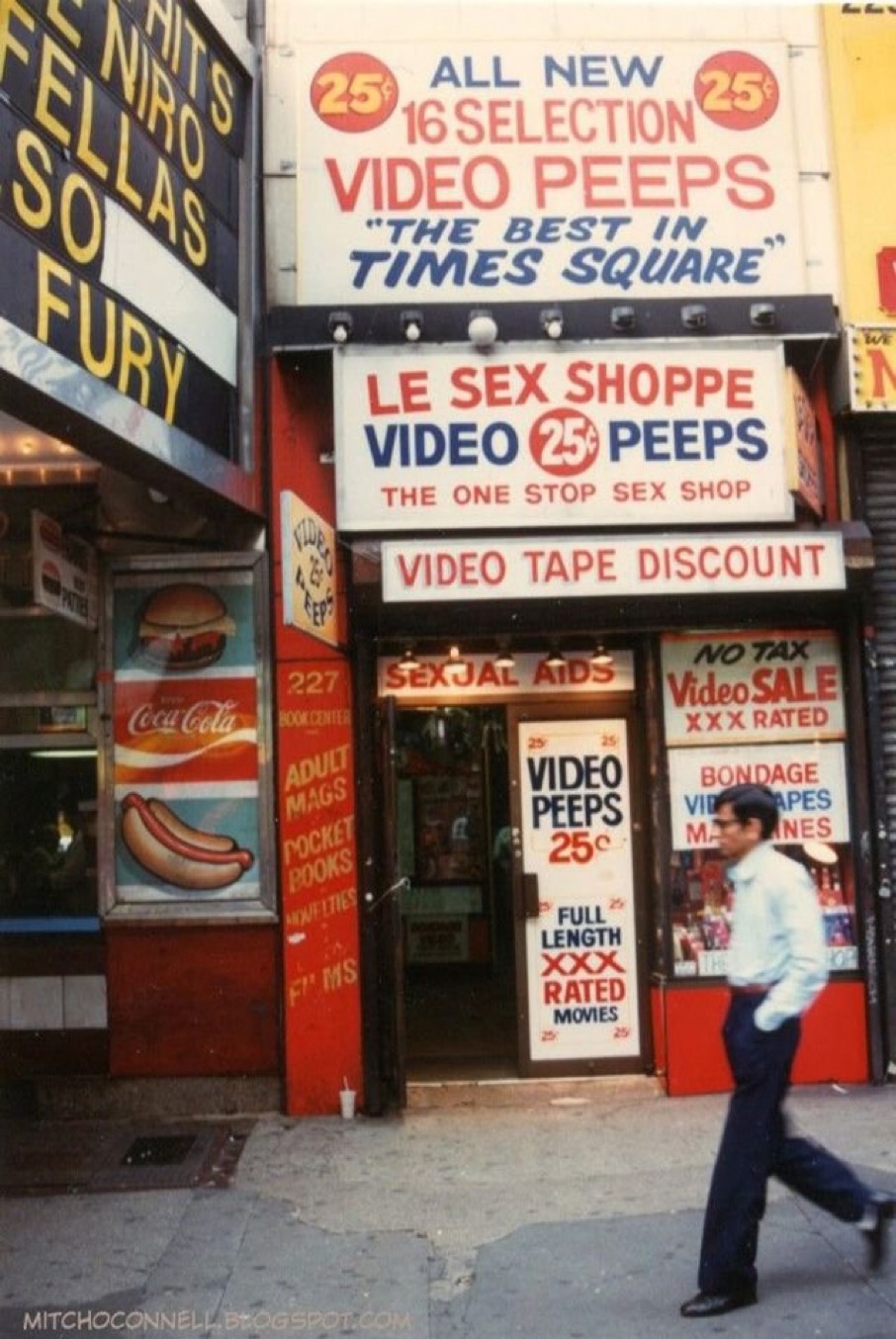
The man does not look. He keeps walking, inwardly sealed, as if the street were only background and not an invitation. That, perhaps, is the real quiet death of public life: not that the buildings disappear, but that the gaze withdraws.
Richard Sennett wrote about the fall of public man, about how we once had to learn how to meet one another in shared space. That old social skin has worn thin. The street no longer provokes us, embarrasses us, or even really interrupts us. Desire and consumption have moved elsewhere — not necessarily into the home, but into the private enclosure of the digital mind. When everything can be summoned without touch, the storefront becomes a kind of ghost, still standing but no longer fully alive. The sex shop and the soda ad are just relics now, signs from a time when surfaces still pointed towards lived experience.
Baudrillard helps name the mood: the map has swallowed the territory. The man’s indifference is saturation. Why stop for the bold sign when he carries an entire customized world in his pocket? The street has been smoothed over by private attention. What used to be friction is now just passage.
And something important disappears in that retreat. Yes curiosity, but also the currency of the public good — the sense that a city is made by shared looking, shared hesitation, shared presence. Without that, the street becomes a place to bypass rather than inhabit. The man keeps walking, unremarkable, almost ghostlike, through a graveyard of signs. The deepest change in the city may not be glass towers or new roads, but this quieter thing: the human eye learning not to see what is right in front of it.



No comments:
Post a Comment