The late afternoon light settles across the bed like a warm weight, and the figure lying there feels both relaxed and deliberate. Face down, wrapped in a thin blue Lycra layer, he looks at first like someone resting. But the longer you look, the more it becomes clear that this is not accidental ease. It is a body aware of itself, aware of how it takes up space, aware of the fact that it can be seen.
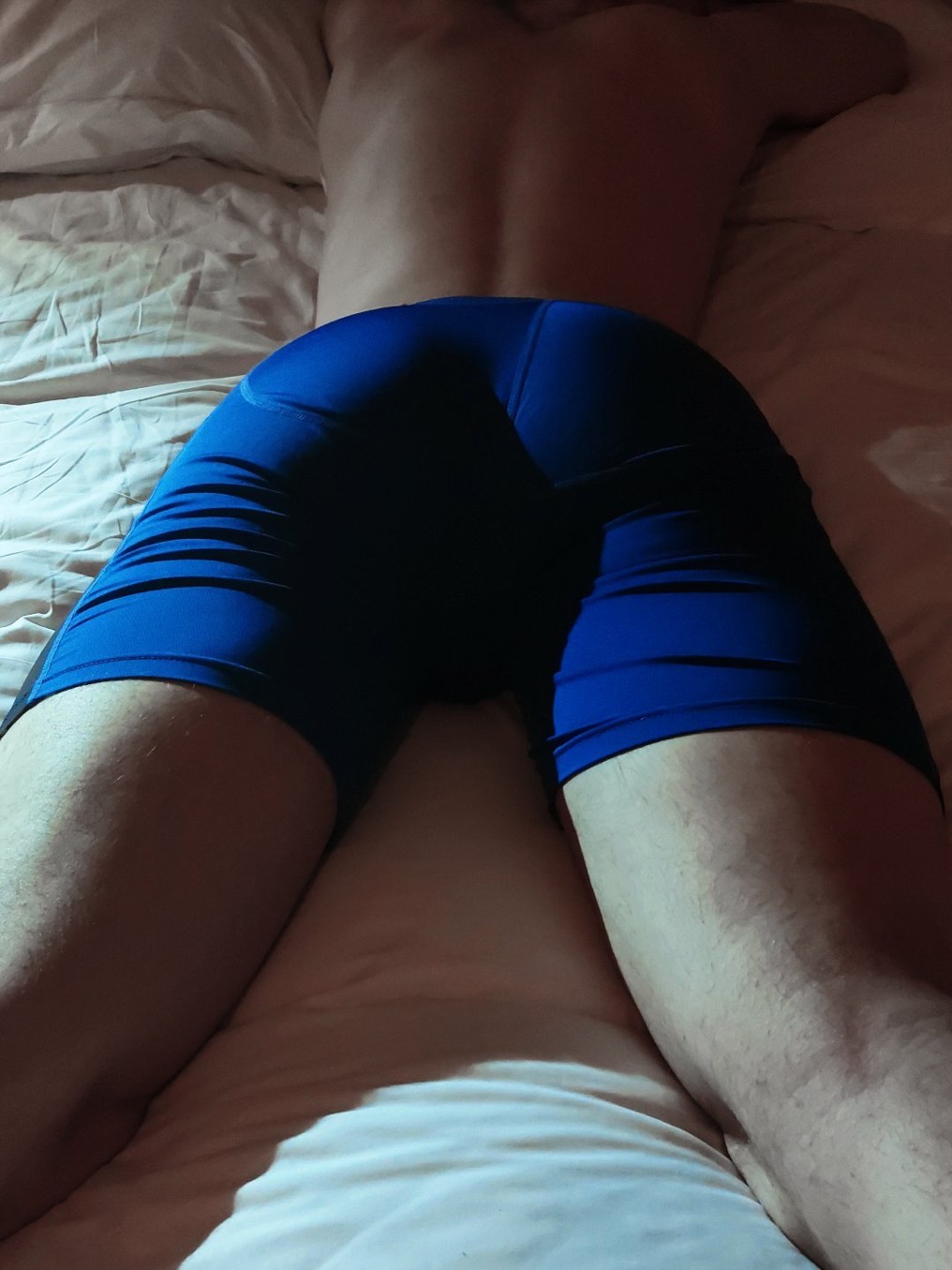
For a long time, the masculine body was treated mainly as something functional — built for work, endurance, labor, usefulness. It was expected to act, rather than appear. To be looked at was often framed as a loss of authority, a kind of reversal in which the man became an object rather than the subject of the gaze. But that old arrangement has changed. Now the male body is increasingly presented as something aesthetic, something composed, something worth staging. The curve of a back, the shape of a shoulder, the line of a leg — these are signs of strength. They are also signs of display.
That shift changes the meaning of looking itself. Laura Mulvey’s idea of the gaze helps explain how visual power once belonged so clearly to the observer. But here the body is not passively receiving attention. It is participating in it. It is arranged to be watched, and in that arrangement, it gains a different kind of control. Michel Foucault might call this a modern discipline of the body: a way of making identity through posture, visibility, and self-presentation.
What makes this interesting is that it also changes masculinity’s emotional register. Earlier cultures often kept desire towards men hidden, coded, or softened under the language of sport, heroism, or discipline. But in a world shaped by image and performance, that distance shortens. The male body can now be openly curated, openly desired, openly aware of itself as image. And that creates a strange tension: the body still carries the old language of strength, but it now also lives inside the new language of being looked at.
That is the quiet force of the scene. The room stays ordinary, the light keeps fading, but the blue Lycra holds its place like a signal. It marks a masculinity that is no longer only about doing. It is also about appearing, knowingly, in the gaze of others.



No comments:
Post a Comment