The opening of Holocene feels like a cold morning made audible — brittle, bright, and wide open. Then Justin Vernon sings, And at once I knew, I was not magnificent, and what could sound like defeat instead lands like release. In a culture that constantly asks us to build ourselves into something larger, shinier, and more legible, that line feels radical.
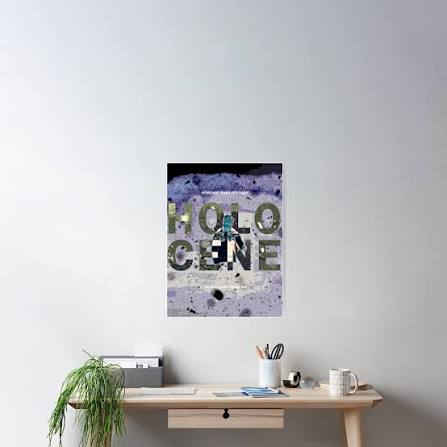
So much of modern life runs on self-inflation. We are pushed to perform our lives, curate our identities, and treat every moment as potential evidence of our importance. Even the private self is expected to show up in public, polished into something shareable. The pressure is relentless: be interesting, be visible, be unforgettable. It is exhausting to live inside that demand.
That is what makes the song’s humility so striking. And there is an important distinction worth making here: being insignificant in the sense of being overlooked is not the same as being insignificant in the sense of standing before something far larger than yourself. A crowded room can make you feel erased. A mountain, or a stretch of geological time, makes you feel small in an entirely different way — strangely freeing rather than diminishing. One kind of smallness is humiliating while the other is clarifying.
What Holocene offers is relief from the burden of being the center of everything. It lets the self step back without collapsing. It suggests that not every life needs to be magnificent in order to matter — and that the relief begins precisely when we stop demanding that of ourselves. Once the ego opens its grip, the world becomes larger again: more textured, more mysterious, less trapped inside our own performance.
That is part of why the song endures. It speaks to a quiet exhaustion many people carry now — the fatigue of having to mean so much, all the time. Vernon’s voice names and moves through the fatigue.
In the end, Holocene is not about diminishing the self. It is about giving the world back its scale.




No comments:
Post a Comment