The street has gone quiet in a strange, emptied way, and we move through it behind masks that do more than cover the mouth and nose. They seem to hold something of us back. They mark a boundary, a soft border between the self and the pressure of the crowd.
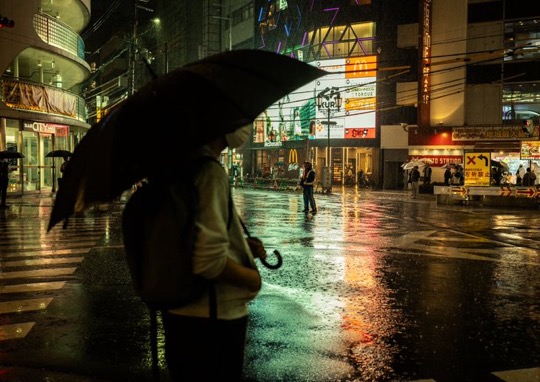
Wearing a mask changes the way the face exists in public. The face was once the main currency of social life — the place where we offered politeness, warmth, concern, or control. So much depended on expression, on being readable. But the mask gives us a way to step back from that demand. There is something almost freeing about it. With the lower half of the face hidden, we are no longer required to smile on cue, to perform ease, to keep arranging ourselves for strangers. The mask becomes a literal version of what Jung called the persona: the social face we present to the world.
But once that social face starts hiding, something else happens too. The self gets a little more room to retreat. We pass one another carefully, eyes meeting only briefly, then looking away. There is caution in that glance, but also distance. As Sherry Turkle might say, it begins to resemble being alone together. The city no longer holds us in the same way. It reveals how fragile that sense of togetherness always was.
And yet though the mask shelters the body, it can also make the spirit feel sealed off. The other person is reduced to a pair of eyes, and the full humanity of the face is partly lost. That loss is real. But so is the odd freedom it brings: the freedom to move through public space without being fully claimed by it, to exist without constant exposure.
So the masked city becomes a place of partial presence. No one is entirely absent, but no one is fully available either. We keep our distance, not only for safety, but because disappearance has become a kind of skill. The streets remain quiet, and in that quiet there is both loss and relief.


No comments:
Post a Comment